Why refrigerant matters more than most homeowners think
Your heat pump doesn't use up refrigerant the way a car uses gas. The refrigerant is sealed in a loop of copper lines, moving heat in and out of your house. If that loop is working, you never add more. So when a Troy home needs a top-off, it almost always means the loop has a leak somewhere.
The tricky part is that a low charge doesn't usually shut the system down right away. The unit keeps running, just not well. That's why homeowners often live with the problem for a whole season before they call anyone. Most of the signs below show up slowly, so it helps to know what you're looking at.
Our team at Heat Pump Repair Troy sees these cases every winter and summer. A lot of the calls start with a comment like "it just doesn't feel as warm as it used to." That feeling is worth taking seriously.
Ice building up on the outdoor unit
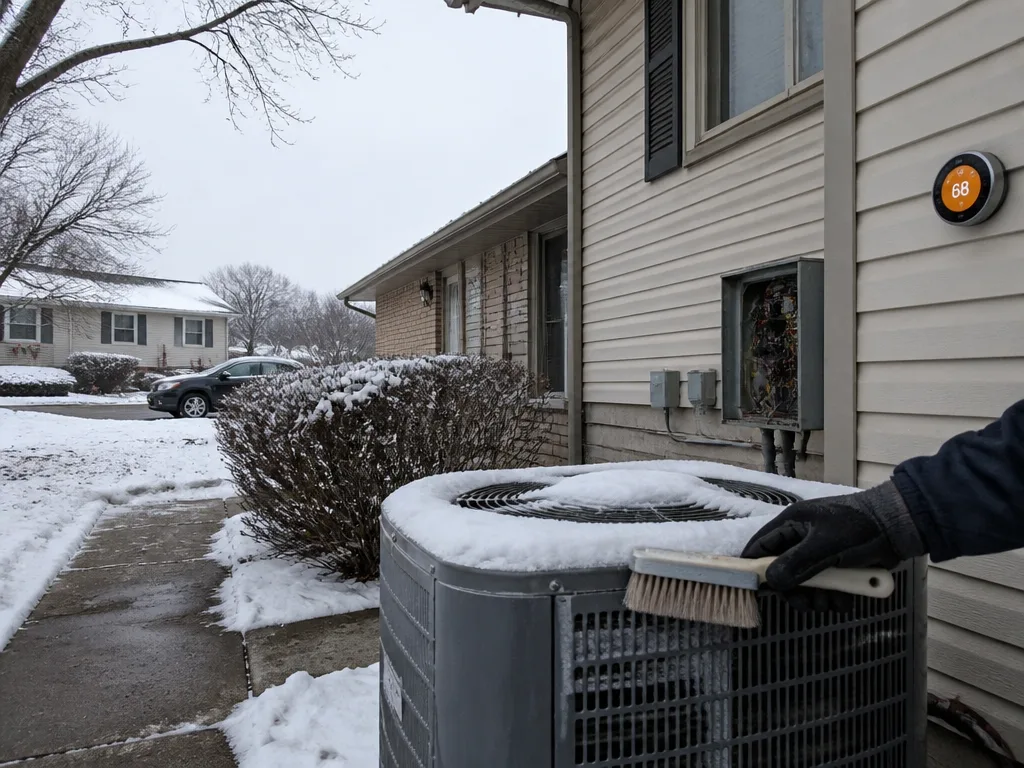
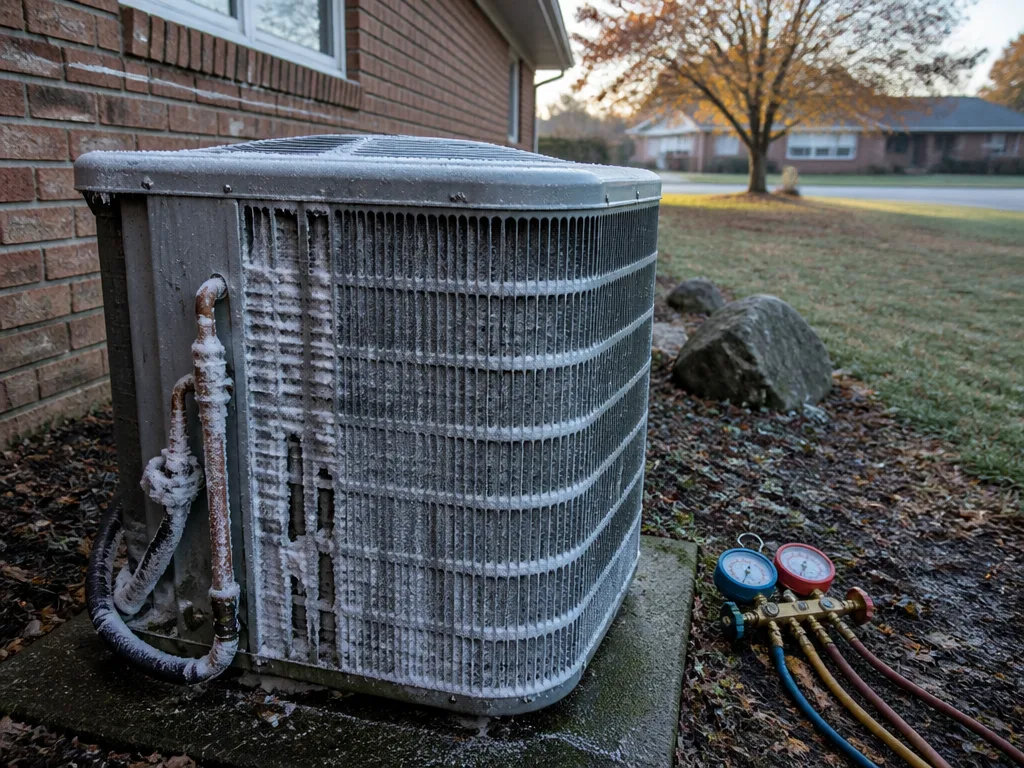
A little frost on the outdoor coil during a cold snap is normal, especially on a February morning in Oakland County. A heavy layer of ice that stays put is a different story. When refrigerant pressure drops, the coil temperature drops with it, and moisture from the air freezes onto the metal.
Check the copper line running from the outdoor unit into the wall. If you see frost or ice creeping along that line, or the coil is white from end to end, shut the system off at the thermostat and let it thaw. Running it through ice usually makes the problem worse. Then call an HVAC technician to check the charge and look for the leak.
Don't chip the ice off with a screwdriver. The fins are thin and bend easily, and a bent fin cuts airflow even after the leak is fixed.
Air that feels weak, or takes forever to warm up
Low refrigerant means the coils can't move as much heat. The result is air from your vents that feels lukewarm in heating mode or not quite cold enough in cooling. You might notice the system runs longer than it did last year, yet the living room still feels off.
Here's a quick way to compare. Stand near a supply vent in your kitchen during a run and hold a hand over it. If the air feels barely warmer than the room in heating mode, that's a clue. Do the same test the next season in a similar outdoor temperature. If it's trending down, pay attention.
Weak airflow can also come from a dirty filter or a blocked return, so change the filter first. If the air is still weak after that, the refrigerant charge is the next thing an HVAC technician should check.
Hissing, bubbling, or a sweet smell near the unit
A hiss near the outdoor unit or the indoor air handler can mean refrigerant is escaping through a pinhole or a loose fitting. Bubbling or a faint oily residue on the copper joints points the same way. Don't assume the sound is harmless just because the system is still running.
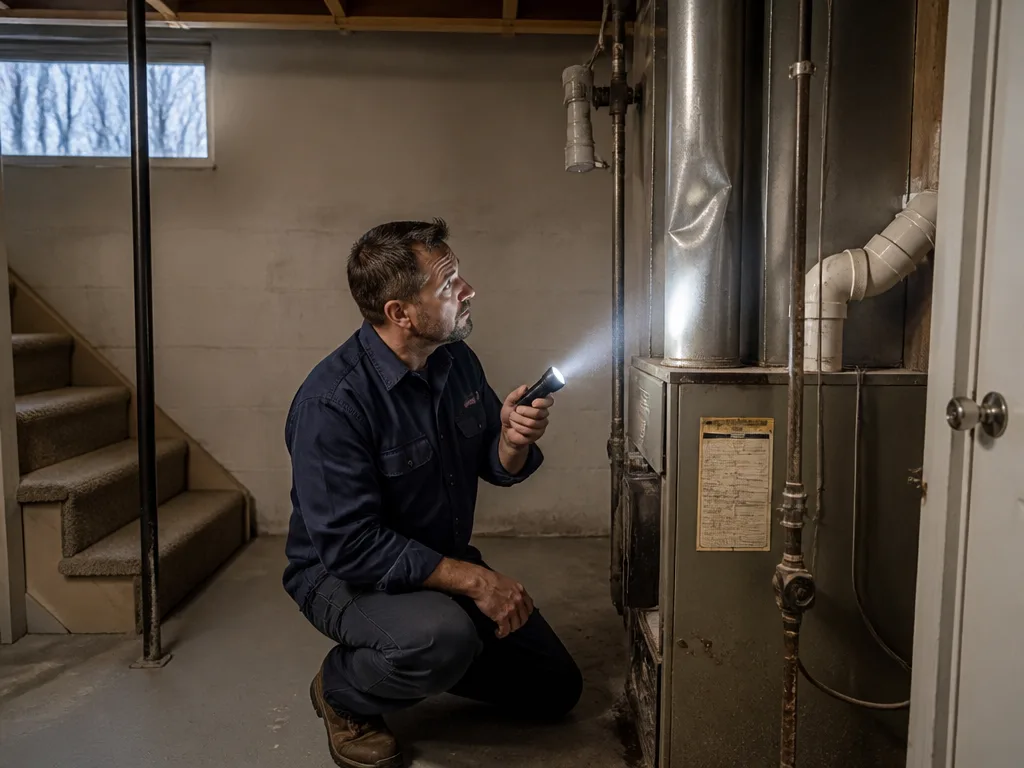
Some refrigerants have a faint sweet, almost ether-like smell when they leak in quantity. If you notice a strange odor around the indoor unit, get out of the room, keep the door closed behind you, and call for service from outside the house. Leaks at a fitting are often simple to fix once they're found, but you don't want to guess at the source.
Higher energy bills with no change in habits
A heat pump with a low charge has to run longer to hit the same thermostat setting. That shows up on the bill. If your usage jumped in a month when the weather was normal and nobody changed how they used the house, the system may be losing efficiency.
Keep a simple log for two billing cycles. Write down the thermostat setting, the average outdoor temperature from a weather app, and the total kilowatt hours on your statement. A steady climb in run time at the same setpoint is a strong hint. It won't prove a leak by itself, but it gives an HVAC technician a useful starting point when you call.
The unit short-cycles or never seems to rest
Short-cycling means the compressor starts, runs a few minutes, shuts off, and starts again. It can also mean the system runs nonstop and never reaches the setpoint. Both patterns make the compressor work harder than it should. Low refrigerant is one of the common causes, along with a failing sensor or a control problem.
A compressor that short-cycles for weeks is wearing itself out. If you notice this pattern, turn the system off at the thermostat until someone can look at it. Running it hard in that condition is how a repair turns into a replacement.
What to do when you spot one of these signs
Start with the easy checks. Change the filter, clear leaves and debris from around the outdoor unit, and make sure the thermostat is set where you expect. If the sign is still there, stop running the system for a while and call Heat Pump Repair Troy. Tell the person who answers exactly what you saw: the frost pattern, the sound, the bill change, or the cycling.
The details matter. "Ice on the copper line by the outdoor unit, started Tuesday after the cold night" is far more useful than "the heat isn't working right." It helps our team plan the visit and bring the right tools. Scheduling in Troy and the nearby cities usually works within the same week, depending on the season.
Catching a refrigerant leak early keeps the repair smaller and keeps the rest of the system healthy. Watch for the signs, write down what you notice, and make the call while the problem is still a problem and not a failure.