If your furnace clicks on, runs a while, and then just sort of sighs, you already know the question is coming. Is it time to replace it? And if so, what is that going to cost? Those two questions tangle together fast. Here in Troy, the answer depends less on the brand name on the sticker and more on what your house looks like and how the old unit was put in.
Heat Pump Repair Troy works on furnaces, heat pumps, and the controls that tie them together, so we see the same handful of factors come up again and again. None of them are mysterious. Some are obvious once someone walks you through them. A few catch homeowners off guard. Let's go through them one at a time.
Size and capacity: the factor nobody wants to hear about
Furnace capacity is measured in BTUs per hour, and the right size depends on how much heat your house actually loses. Troy has plenty of older brick colonials and split-levels from the 1960s and 70s, along with newer subdivisions built tight. A well-insulated newer house may need a smaller unit than the one it replaces. A drafty older home may need more output, not less.
The trap is replacing like with like without checking. Sizing the new furnace to match the old one sounds sensible, but if the old unit was oversized from the start, you end up paying for capacity you never use. If the house has since gotten new windows or added attic insulation, the math shifts again. A proper load calculation takes more time than a quick swap, and that time shows up in the final bill. It also tends to pay off, because a furnace sized correctly runs longer cycles, wears more evenly, and keeps rooms at the temperature you set.
Efficiency rating and what it does to your monthly gas bill
Furnaces are rated by AFUE, which stands for annual fuel utilization efficiency. An older standard model might sit around 80 percent, meaning most of the gas turns into heat and the rest exits through the flue. Higher-efficiency condensing models push well above that number, but they cost more to buy and more to install.
Higher efficiency is not automatically the right call. In a Troy home where the furnace runs hard from December through February, the fuel savings can justify the extra spend over several winters. If the house sees lighter use, or you expect to sell within a few years, a mid-range unit may make more sense. Think about how long you plan to stay and how cold the house actually feels, not just what the paperwork says.
Questions worth answering before you decide
- How many years do you expect to live in the house?
- How many real heating days do you get, and what does your gas bill look like in a hard January?
- Can the existing venting handle a condensing unit, or will it need to change?
- Do you care about quieter operation and a more even air temperature?
Venting, gas supply, and the parts you cannot see
This is where replacements sometimes go sideways. A high-efficiency condensing furnace exhausts cooler gases, so the venting usually has to switch from metal flue pipe to PVC, and the condensate needs a proper drain. An older house with a chimney liner sized for a large atmospheric unit may need relining or a different exhaust route. Those are real changes, and they show up often in older Troy homes, especially ones with a chimney that has been patched more than once.
The gas supply line matters too. If the existing line is undersized for the new unit's input rating, the work stops until that gets corrected. Electrical work can come into play as well, particularly if the old furnace ran on an older control board or the new one needs its own circuit. None of this is exotic. It just adds labor and materials, and it is the most common reason a replacement runs longer than the homeowner expected.
Airflow, layout, and where the furnace sits
A new furnace is only as good as the air path feeding it and carrying heat out of it. If the return air grilles are undersized, or the supply vents in the bedrooms were never balanced, the new unit will struggle no matter how good it is. Fixing that can mean adding return capacity, rebalancing vents, or replacing a few worn sections of the air path. Each change adds to the job, but skipping it means you paid for a furnace that cannot do its best work.
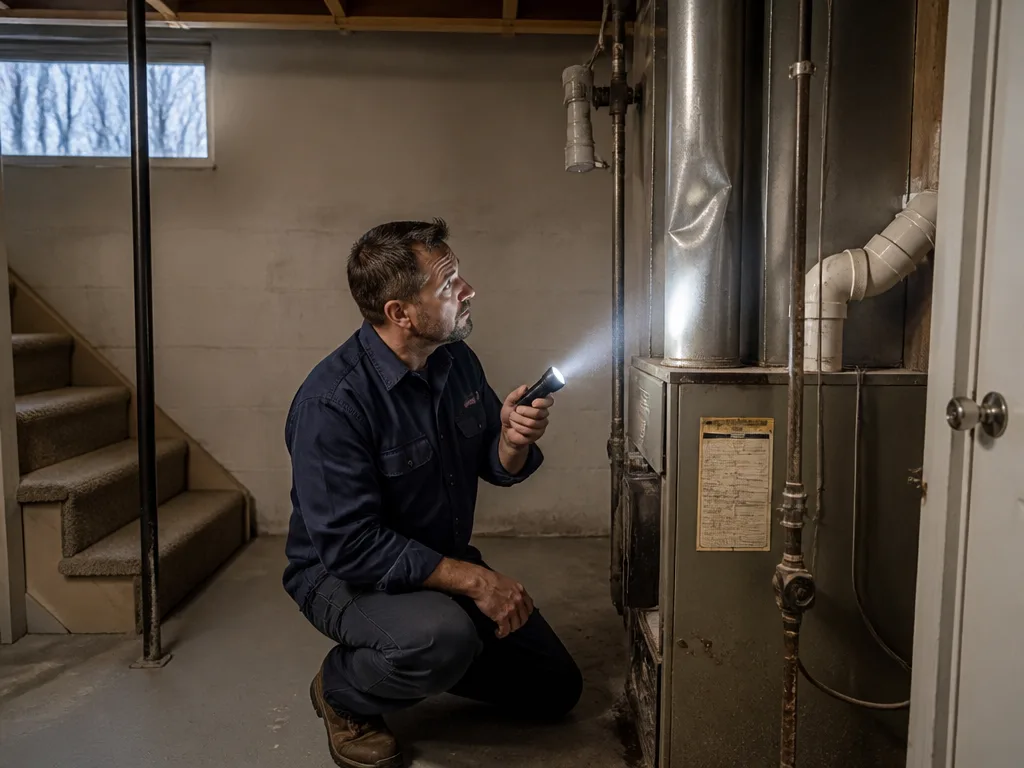
Location counts too. A furnace in a finished basement corner with a tight closet is more work than one sitting in an open utility area with room to maneuver. Troy basements range from wide-open to cramped, and some older homes have furnaces wedged into spaces that were never meant for a full-size unit. If the new unit has to be a different footprint, or needs a new platform or a raised stand for a drain, that all counts toward the total. Attic and crawlspace installs bring their own access and safety considerations, and they take longer than a standard basement swap.
Timing, scheduling, and what to expect when you call
Replacement timing affects cost more than most people realize. A furnace that dies on the first 10-degree night of the year gets handled differently than one you planned for in spring. Planned replacements let you compare options, make decisions without pressure, and schedule work when the crew has room. Emergency replacement in the middle of winter often means fewer choices and a shorter window to think things through.
Permits and inspections are part of the picture as well. Most municipal jurisdictions require them for furnace replacement, and the paperwork adds a bit of time to the front end of the job. That is normal, and it protects you when you go to sell or file an insurance claim later.
If you are wondering where your house falls on any of these factors, give us a call. Our HVAC technicians can talk through what applies to your home, what the old unit was doing wrong, and which options make sense for how you actually live in the house. Same-week scheduling is often possible, and a phone conversation is the best place to start. Heat Pump Repair Troy has been working with Troy homeowners on heating problems for a long time, and the questions you bring to the phone are usually the ones that matter most.